Social Icons

Monday, May 27, 2013

Memorial Day 2013

On this very honorable moments of memorial day to commemorate the fallen warriors of USA the day when the Civil War raged I'd like to share a proclamation in early Memorial Day which was known as Decoration Day that year by a retired General "The 30th of May, 1868, is designated for the purpose of strewing with flowers, or otherwise decorating the graves of comrades who died in defense of their country and during the late rebellion, and whose bodies now lie in almost every city, village and hamlet churchyard in the land. In this observance no form of ceremony is prescribed, but posts and comrades will in their own way arrange such fitting services and testimonials of respect as circumstances may permit."
Then I'd like to honor peoples in the civil war,
Winfield Scott, George B. McClellan, Henry W. Halleck, Ulysses S. Grant, and all the brave soldier who died in Gettysburg, Waterloo, etc who fought for their countries which is united now under the USA Flag, maybe I'm not an American, but I know what is patriotism and the "be proud of your country and love your country" thing.
There are many stories as to the day actual beginnings, with over two dozen cities and towns laying claim to being the birthplace of Memorial Day. There is also evidence that organized women's groups in the South were decorating graves before the end of the Civil War: a hymn published in 1867, "Kneel Where Our Loves are Sleeping" by Nella L. Sweet carried the dedication "To The Ladies of the South who are Decorating the Graves of the Confederate Dead" (Source: Duke University's Historic American Sheet Music, 1850-1920) . While Waterloo N.Y. was officially declared the birthplace of Memorial Day by President Lyndon Johnson in May 1966, it's difficult to prove conclusively the origins of the day. It is more likely that it had many separate beginnings; each of those towns and every planned or spontaneous gathering of people to honor the war dead in the 1860's tapped into the general human need to honor our dead, each contributed honorably to the growing movement that culminated in Gen. Logan giving his official proclamation in 1868. It is not important who was the very first, what is important is that Memorial Day was established. Memorial Day is not about division. It is about reconciliation; it is about coming together to honor those who gave their all.

Memorial Day was officially proclaimed on 5 May 1868 by General John Logan, national commander of the Grand Army of the Republic, in his General Order No. 11, and was first observed on 30 May 1868, when flowers were placed on the graves of Union and Confederate soldiers at Arlington National Cemetery. The first state to officially recognize the holiday was New York in 1873. By 1890 it was recognized by all of the northern states. The South refused to acknowledge the day, honoring their dead on separate days until after World War I (when the holiday changed from honoring just those who died fighting in the Civil War to honoring Americans who died fighting in any war). It is now celebrated in almost every State on the last Monday in May (passed by Congress with the National Holiday Act of 1971 (P.L. 90 - 363) to ensure a three day weekend for Federal holidays), though several southern states have an additional separate day for honoring the Confederate war dead: January 19 in Texas, April 26 in Alabama, Florida, Georgia, and Mississippi; May 10 in South Carolina; and June 3 (Jefferson Davis' birthday) in Louisiana and Tennessee.
In 1915, inspired by the poem "In Flanders Fields," Moina Michael replied with her own poem: 
We cherish too, the Poppy red
That grows on fields where valor led,
It seems to signal to the skies
That blood of heroes never dies.


She then conceived of an idea to wear red poppies on Memorial day in honor of those who died serving the nation during war. She was the first to wear one, and sold poppies to her friends and co-workers with the money going to benefit servicemen in need. Later a Madam Guerin from France was visiting the United States and learned of this new custom started by Ms.Michael and when she returned to France, made artificial red poppies to raise money for war orphaned children and widowed women. This tradition spread to other countries. In 1921, the Franco-American Children's League sold poppies nationally to benefit war orphans of France and Belgium. The League disbanded a year later and Madam Guerin approached the VFW for help. Shortly before Memorial Day in 1922 the VFW became the first veterans' organization to nationally sell poppies. Two years later their "Buddy" Poppy program was selling artificial poppies made by disabled veterans. In 1948 the US Post Office honored Ms Michael for her role in founding the National Poppy movement by issuing a red 3 cent postage stamp with her likeness on it.
Traditional observance of Memorial day has diminished over the years. Many Americans nowadays have forgotten the meaning and traditions of Memorial Day. At many cemeteries, the graves of the fallen are increasingly ignored, neglected. Most people no longer remember the proper flag etiquette for the day. While there are towns and cities that still hold Memorial Day parades, many have not held a parade in decades. Some people think the day is for honoring any and all dead, and not just those fallen in service to our country.
There are a few notable exceptions. Since the late 50's on the Thursday before Memorial Day, the 1,200 soldiers of the 3 Div. U.S. Infantry place small American flags at each of the more than 260,000 gravestones at Arlington National Cemetery. They then patrol 24 hours a day during the weekend to ensure that each flag remains standing. In 1951, the Boy Scouts and Cub Scouts of St. Louis began placing flags on the 150,000 graves at Jefferson Barracks National Cemetery as an annual Good Turn, a practice that continues to this day. More recently, beginning in 1998, on the Saturday before the observed day for Memorial Day, the Boys Scouts and Girl Scouts place a candle at each of approximately 15,300 grave sites of soldiers buried at Fredericksburg and Spotsylvania National Military Park on Marye's Heights (the Luminaria Program). And in 2004, Washington D.C. held its first Memorial Day parade in over 60 years.
To help re-educate and remind Americans of the true meaning of Memorial Day, the "National Moment of Remembrance" resolution was passed on Dec 2000 which asks that at 3 p.m. local time, for all Americans "To voluntarily and informally observe in their own way a Moment of remembrance and respect, pausing from whatever they are doing for a moment of silence or listening to 'Taps'."
The Moment of Remembrance is a step in the right direction to returning the meaning back to the day. What is needed is a full return to the original day of observance. Set aside one day out of the year for the nation to get together to remember, reflect and honor those who have given their all in service to their country.
But what may be needed to return the solemn, and even sacred, spirit back to Memorial Day is for a return to its traditional day of observance. Many feel that when Congress made the day into a three-day weekend in with the National Holiday Act of 1971, it made it all the easier for people to be distracted from the spirit and meaning of the day. As the VFW stated in its 2002 Memorial Day address: "Changing the date merely to create three-day weekends has undermined the very meaning of the day. No doubt, this has contributed greatly to the general public's nonchalant observance of Memorial Day."
On January 19, 1999 Senator Inouye introduced bill S 189 to the Senate which proposes to restore the traditional day of observance of Memorial Day back to May 30th instead of "the last Monday in May". On April 19, 1999 Representative Gibbons introduced the bill to the House (H.R. 1474). The bills were referred the Committee on the Judiciary and the Committee on Government Reform. 
The origin and purpose of Memorial Day has grown quiet foggy over the years as well, just as Americans do not really have the best understanding of the causes and effects of the civil war. One of your local enforcement official thinks people are more likely to associate Memorial Day with sales rather than with fallen soldiers. A county chief in your country said that Memorial Day has changed from a day of veneration growing out of Decoration Day to wholesale commercialization in the Memorial Day of today. Hahaha...I don't think he's alone :p
So, good citizens of United States of America, why don't you rejoice because you don't have to shoot your brother/sister to stay alive?

All I can say is revive your tradition of Memorial Day and don't forget the moment of remembrance at 3 pm of your local time friend :), here is some ideas I think maybe useful :


  • Write your Representative and your Senators, urging them to support Mr. Inouye's bill to restore Memorial Day. Ask them to co-sponsor the bill (especially your Representative, urge them to introduce the bill to the House).
  • Contact members of the Senate Judiciary Committee and urge them to act upon the bill.
  • Sign the Petition in support of the bill.
  • Write to Mr. Inouye to let him know of your support.
  • If you are a member of a military/veteran organization, please consider bringing this matter to the attention of your fellow group members; urge them to sign the petition and to help spread the word.
  • Wear or display Memorial Day Stickers, Buttons and Magnets.
  • Do you have any ideas besides that? I guess of course yes, you are the Americans, the proud Americans

readmore...

Saturday, May 25, 2013

What is Special Forces? #2 -End-

Fellow readers, I will continue to share about special forces, this time I'll focus on the terrorism.

Italian Counter-terrorist
Members of Central Security Unit (CSU) are training freefall. Police unit that specialize themselves in counter-terrorism, CSU require the member to do the years of intensive training, including parachuting and diving.


The idea about special forces operating behind the enemy line already discussed since long time ago. In 500 BC, when General Sun Tzu wrote his grand masterpiece, Art of War, he explained the needs of armed forces to developed a unit that he called as "survived spies" to execute the special operations in enemy territory.This Sun Tzu "survived spies" still exist in British SAS ideas, which they called as "grey man", which is a specialist from special forces that the enemy perceived as not too important until need to be interrogated.

An important activities of the special forces during war time is forming local rebellion groups behind enemy line. This small units are trained and armed with local knowledge to gain the local's sympathy so that they could become "terrorist" to the enemy. A British army officer, T.E. Lawrence done this strategy in middle east during the World War I (1914-1918). At that time he succeeded to convinced the Arabians to rebel against the Turks. His guerrilla army he created became the thorn to Turkish army.

Counter-Terrorism

Because of their experience handling terrorists techniques since the end of World War II, special forces role is very vital in counter-terrorist operation nowadays. British SAS was the first unit to face terrorism in the hand of the communist guerrillas in Malayan forests at 1950s. US special forces just started to develop the counter-terrorist strategy a decade later, when there is a growing awareness that global terrorism couldn't be handled alone by the conventional military or police. The act of counter-terrorist "sue" the special forces to defend and protect major city and economic target, such as oil installation. The team usually works directly under the control of police which known as direct action task. British SAS leave a concrete example when relieving Iran embassy from terrorist in London at 1980.
^Hostage rescue exercise 
Personnel from Central Security Unit (CSU) Italy showing their rappelling skill in hostage rescue exercise. Beside hunting down terrorist, this unit also responsible for VIP protection when high level politician or diplomat from another country visit Italy.
^British SAS taking position on the balcony on the Iran embassy in 1980
British SAS on mission free sander. five terrorist were killed.
readmore...

What is Special Forces? #1

      "Who Dares Wins"


 Special Forces has an unique characteristics. Chosen and drilled specially, this units are often tasked to carry out covert mission,secret mission, or high risk mission. The process of choosing and drilling needs a long time and complex things has a high level of failure. As a result, special forces units is likely to be a small number of people in the huge military machine. But because of their ability and renowned as having a high capability, elite units always have the potency to win the war. In this writing, I will publish as neutral as I can the overview of Special Forces selection procedures, how they led, and what role will they play in the future.

Special Forces : Definitions

Special forces often seen as the glamour world in the military. They are the most capable people to capture the heart of the media to make every action of their as the headline. Even western media like to said that peeping on them is more intriguing than watching James Bond. The reality? very different....a life without a name, super-hard work in tormenting condition without thanks, morale rupturing danger, and the tiring and heavy exercise, In the times of war, special forces often operate behind enemy line for sabotage or espionage. Another main role of them is counter-terrorism.


USA Green Berets' Badge and Logo
 The very basic things, Special Forces is a military unit that trained for unconventional operations. Although there is a clear divider line between the special and conventional unit, it actually quiet hard to be explained. But it is already common that the terms "Special Forces" refers to all units trained for different type of operations. For example, since the World War II (1939-1945), they have been playing an important role of counter-terrorism. Other special tasks (unique) are as guards, or at the war times, infiltrate far deep into enemy line for espionage, demolition, and interference. Because of that uniqueness country like USA put Special Forces separately. This high quality troops are exist in every branch of army as well as in the law enforcement agencies.
 Otherwise in the smaller countries and less prosperous nations, special forces training that they had is not really particularly specific. Their special forces exercise and work in the same level as an conventional army from greater continent. Take example of North Korea, this communist nation have a lot of "Special Forces", Special just because they have been specifically trained to infiltrate South Korea and make a maximum chaotic condition. Sometimes, that kind of "Special Forces" are created for political reason,  in order to create loyalty to the state or to the state leader.
 Another important characteristic that distinguish Special Forces than conventional forces is the matter of size. Their number has nothing to do in which level they are controlled. For example British Special Air Service (SAS). Even though their number is approximately same as one British Tank Battalion (total 600), but they are taking order from highest command in the times of war, or direct from the  British government when dealing with terrorist in homeland. Similar to that thing, A-Team of US Green Berets that has 12 personnel led by a captain, they can easily do the job by direct order from Pentagon or President's staff in White House.

  
< French Foreign Legion
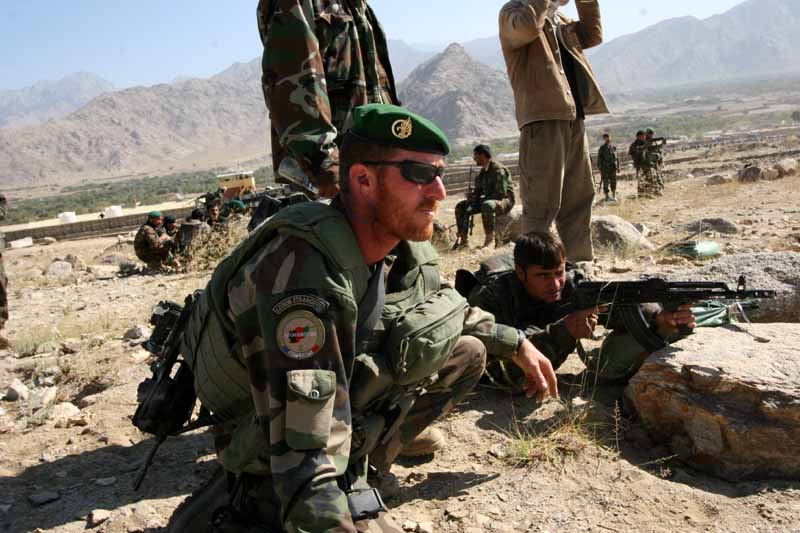
All members of the French Foreign Legion is a Special Forces, they are the legion troops, part of the French Quick Reaction units


British Grenadier Regiment

^Guards Unit
These Soldiers is the member of British Grenadier Guards Regiment. Even though they are a highly trained infantry soldier, and moreover an elite, Grenadier Guards couldn't be considered as a Special Forces because they don't operate behind enemy line. nicknamed as "Red Coats"

readmore...

Friday, May 24, 2013

Foreword to the Ultimate Special Forces


Special Training


Special Forces have a much greater and far more important role to play in the many forms of warfare that face armed forces in the 21st century than they had in the 20th century. Since the two World War and the consequent Cold War (1945-1990), global terrorism has forced significant change. It used to be possible to predict most likely threats, then equip and train forces to deal with them. But today, military commanders must plan to be totally flexible and able to cope with everything from full-scale armored warfare to sporadic guerrilla operation in urban areas.
Just as there are no obvious threats, there are also no obvious responses. In the 21st century, it will not be possible simply to declare war and start sending in the tanks. And immediate and proper response is far more important, with imaginative thinking backed up by a wide range of military options-which is precisely what today's high tech special forces provide.
However, the general public perception of special forces has been influenced by a media hungry for heroes and victories. Their operation are often glamorized and inaccurately reported. Special Forces operations are kept secret (for obvious reasons), which upsets many journalists. Any hint that there could have been some kind of failure becomes a big story: total success is the norm required of military commanders by journalists, who do not understand that every special forces' operation continually lurches from crisis to near disaster until the troops are safely back at base. Special forces' troops can be illustrated either as arrogant, swaggering, psychopaths, or as gilded heroes achieving miracles of superhuman toughness. Both impressions are wrong.
As special operations become more frequent, which I believe they will, it is vital that the public understands much more of the reality of special forces and their capabilities, stripped of mythology and media hype. This blog shows how modern special forces operate, the weapon, skills, and equipment they use, and the methodological way in which they plan and execute their missions. Being masters of their trade, special forces choose the right tools for each particular job, so this blog also includes comprehensive section showing actual equipment they use. But the most interesting and critical aspect of special forces is the quality of its people. This books therefore show how they are selected and trained, and how the ideas, bravery, and actions of individual soldiers have created and shaped today's special forces' units.
Modern special forces grew in response to the rise of terrorism in the years following World War II (1939-1945). Their counter-terrorist role is now more important than ever. The relentless economic drive towards globalization has already stimulated regional opposition in most continents , and increasingly well-organized global terrorism. Future conflicts are certain to be politically complicated, with terrorists tactics and terror groups being used by political organizations and lesser countries to confuse and weaken greater nations. This "Asymmetric warfare", in which both the armed forces and political will of larger nations are eroded by a smaller enemy, requires a sophisticated, multifaceted response, which characterizes modern special force capability.
The Iraq War of 2003 was the beginning of a very new type of "effects-based" warfare, in which computer technology enables military commander to concentrate firepower and land forces with devastating speed-so called "network-centric" warfare. For the first tome, throughout the use of this technology, special forces are able to play a major part in conventional operations not just with their characteristic covert intelligence gathering, raiding, and sabotage operations, but by taking over and controlling entire zones of the battlefields, as we seen in 2003 with US special forces in northern Iraq. The range and speed of today's missile systems gives unparalleled power to just one man in the right place, with the right training, and the right equipment.
Battles used to be determined by destroying enemy forces, occupying ground, and controlling certain key points or assets. Modern effects-based warfare is radically different and uses military force to achieve a certain predetermined effect-which could be to force a political decision, or to immobilize an army. Creating this effect can be done in many ways; and once it is achieved, the military action switches to creating some other effect.
The potential for special forces in effects-based warfare is enormous. Special forces' operation have always achieved effects far greater than the numbers of troops involved-usually through daring and innovative planning. Fighting is only one way to achieve victory. A British Special Boat Service (SBS) mission in the 1991 Gulf War cut the Iraqi High Commander's fiber optic communications cable at a critical time. The occupation of Baghdad in Iraq in April 2003 was a masterly combination of covert special forces' activity and the careful maneuvering of armored forces. The predicted bloodbath of house to house street fighting never materialized.
Throughout history, special forces have always centered on the individual, making each person feel a member of an elite, with higher standards that other military units and capable of far greater achievements in combat. In many ways, this is a reversal of the usual military training process, which seeks to turn individuals into team members. Individuals are rigorously tested and carefully selected, then kept it to standard with every exacting training exercises on the principle of "train hard, fight easy".
Special forces are totally committed to achieving their mission, either as a group or as individual. If all else fails, just one man will continue to the target and attempt to execute the operation. Dedication and determination must be combined with a high level of common sense. Sound personal and psychological qualities are more important that fitness and psychic, particularly as injuries are a common occupational hazard that must be endured as part of the rigors of an operation.
Special operations are planned using a much greater input than normal from the soldiers taking part. Their personal experience and preferences are utilized to develop plans that stand the greatest chance of success. Special forces are particularly good at evaluating risks, then taking them as sensibly as possible. While knowing that all caution must be abandoned at times in order to achieve surprise.
Special forces have rapidly developing roles in modern warfare, as shown in Afghanistan (2002) and Iraq (2003), as well as in counter-terrorist actions. But, as their role becomes more accepted part of modern warfare, it is important to remember what they are and where they came from. Special forces were started by individuals with vision-mavericks who were very often opposed by their superiors. As their role becomes increasingly more important, it is vital that special forces continue to evolve-and above all else, avoid becoming conventional in their outlook.


readmore...
 
Blogger Gadgets